
PNEUMATIC CONVEYING SYSTEM: TYPES, BENEFITS & DESIGN GUIDE
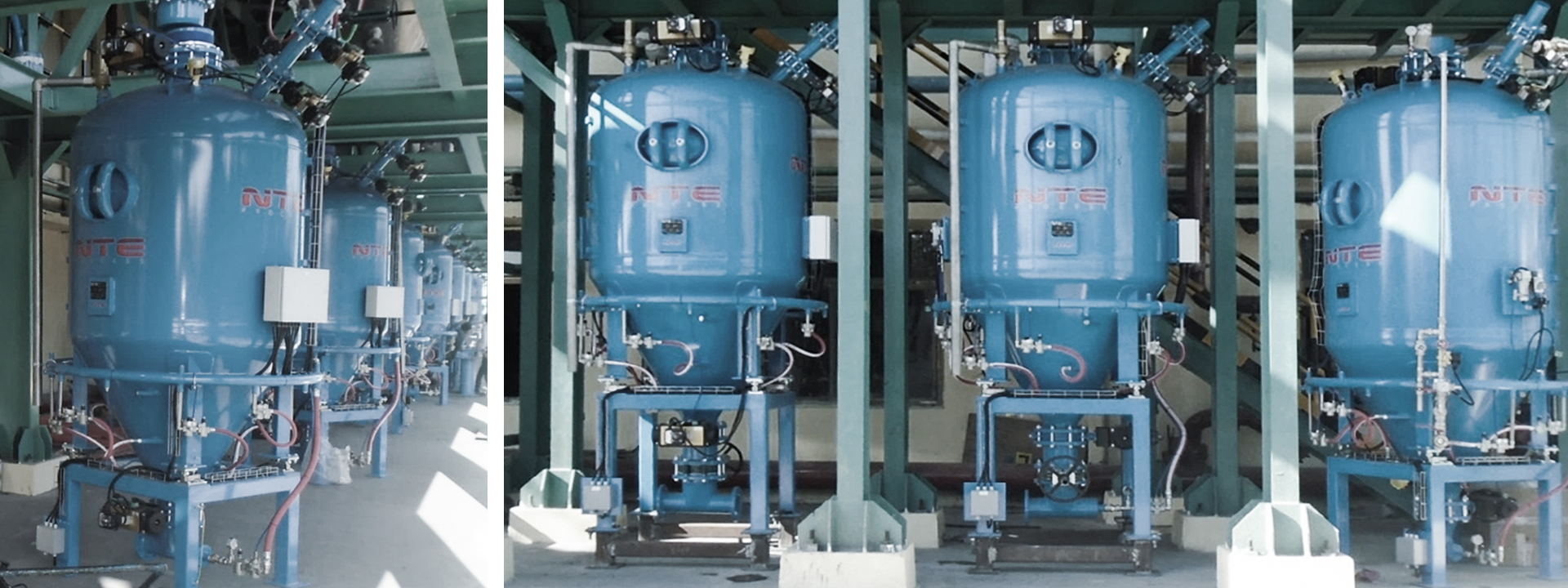
In bulk material handling, a pneumatic conveying system is one of the most efficient and widely used solutions for transporting dry materials.
From food ingredients to chemicals, plastics, and minerals, selecting the right conveying method is essential to improve operational efficiency, product quality, and plant performance.
But how does pneumatic conveying work, and when should you choose it over mechanical conveying systems?
WHAT IS A PNEUMATIC CONVEYING SYSTEM
A pneumatic conveying system is an industrial solution designed to transfer powders, granules, and dry bulk materials through a closed pipeline. By utilizing a pressure differential and gas flow (typically air or nitrogen), these systems move materials safely and efficiently.
Key Components of a Pneumatic Conveying System
A standard system includes:
- Air source (fan, blower, or compressor)
- Feeding device
- Conveying pipeline
- Receiving vessel
- Dust collection or filtration system.
This technology is widely used in industries such as food processing, chemicals, plastics, and minerals, handling materials like flour, cement, sand, and plastic pellets. However, it is best suited for dry materials, while slurries or pastes are generally not compatible.
HOW DOES A PNEUMATIC CONVEYING SYSTEM WORK
The system operates by transferring energy through airflow and pressure differentials.
There are two main operating modes:
Pressure Conveying Systems
- Air is pushed from the beginning of the pipeline
- Material is conveyed forward through the system
Vacuum Conveying Systems
- Air is pulled from the end of the pipeline
- Material is drawn into the system
By controlling air velocity, pressure, and flow rate, materials can be transported efficiently and safely.
ADVANTAGES OF PNEUMATIC CONVEYING SYSTEMS
Compared to mechanical conveying systems, pneumatic conveying offers several key benefits:
- Flexible layout: Pipelines can be routed vertically and horizontally around existing machinery, saving valuable floor space.
- Compact design: Minimal footprint within the plant
- Closed system: Reduced dust emissions and contamination risks
- Low maintenance: With fewer moving parts than mechanical systems, downtime is significantly reduced.
These advantages make pneumatic conveying systems ideal for modern, space-optimized industrial environments.
DISADVANTAGES AND LIMITATIONS
Pneumatic conveying is not a universal solution. Key limitations include:
- Higher energy consumption than mechanical systems
- Increased power requirements
- Larger dust collection systems required
- Not suitable for certain materials, such as:
- Large or dense particles (e.g. gravel)
- Sticky or cohesive materials (e.g. titanium dioxide)
In these cases, a mechanical conveying system may deliver better performance and lower operating costs.
TYPES OF PNEUMATIC CONVEYING SYSTEMS
Pneumatic conveying systems are classified into two main types:
Dilute Phase Conveying (lean phase)
- High air velocity
- Low pressure
Key characteristics:
- High air velocity
- Low pressure
- Material suspended in the air stream
Best for:
- Lightweight materials (flour, talc, pigments)
- Non-fragile products (such as ground coffee, raw materials for loading reactors or bagging machines)
Benefits:
- Simple system design
- Lower initial investment
- Widely used across industries.
Dense Phase Conveying
Key characteristics:
- Low air velocity
- High pressure
- Material moves in plugs or batches
Best for:
- Fragile materials (sugar, rice, coffee beans)
- Abrasive materials (sand, ash, minerals)
- Blends requiring minimal segregation (e.g. food ingredients, glass and ceramics products)
Benefits:
- Reduced product degradation
- Lower pipeline wear
- Optimized energy use in specific applications.
HOW TO CHOOSE THE RIGHT PNEUMATIC CONVEYING SYSTEM
Selecting between dilute and dense phase — and between pressure or vacuum operation — requires a structured evaluation of three key factors:
- Material Characteristics
- Particle size and shape
- Bulk density
- Moisture content
- Abrasiveness and friability
- Cohesiveness and flowability
- Plant Layout and Design
- Available space
- Pipeline routing
- Integration with existing equipment
- Required Performance
- Conveying capacity
- Throughput rate
- Production targets
When to Choose Dilute Phase
- Lower initial investment required
- Materials are non-fragile
- Simple conveying applications
When to Choose Dense Phase
- Materials are fragile or abrasive
- You need to prevent degradation or segregation
- Conveying distances are long
- You want to reduce pipeline wear
Pressure vs Vacuum Systems
The choice depends on:
- Safety requirements (toxic or explosive materials)
- Material behavior (cohesive, fibrous, or sticky materials often benefit from vacuum systems)
- Process control and containment needs
Before finalizing a pneumatic conveying system design, pilot-plant testing is essential. Testing allows you to:
- Validate conveying performance
- Measure air consumption
- Evaluate product integrity (attrition, degradation)
- Optimize system sizing and configuration.
Proper testing ensures reliability, efficiency, and performance under real operating conditions. That’s exactly what we do every day at our NTE Scientific Hub: we validate transportation performance and measure actual energy consumption to ensure the investment is efficient.
A pneumatic conveying system is a versatile, safe, and high-performance solution for dry bulk material handling across a wide range of industries. The optimal choice — between dilute and dense phase, and between pressure and vacuum — requires a thorough analysis of material properties, plant constraints, and production goals.
With expert engineering and rigorous pilot-plant testing, pneumatic conveying can significantly improve efficiency, product quality, and workplace safety in your industrial process.
Ready to find the right solution for your application?
Discover our pneumatic conveying systems and contact us for a personalized technical consultation: 👉🏻 CONTACT US.
For more info
Contact us